Which is Better: Microchannel Coil or Tube-in-Fin Coil?

When choosing a coil for your HVAC or refrigeration system, it usually comes down to microchannel versus tube-in-fin designs. Each has its own strengths, so the right choice depends mostly on what your equipment needs, your budget, and the environment.
Let’s break down the basics to help you decide which type is best for you.
What is a Microchannel Coil?
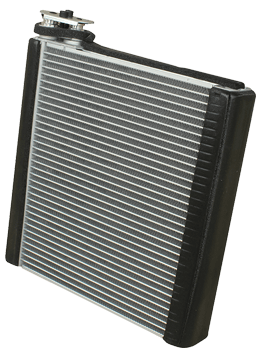
Microchannel coils use flat aluminum tubes containing multiple small internal passages, paired with aluminum fins and headers. Their compact construction and reduced internal volume can help meet capacity requirements while limiting coil size, weight and refrigerant charge. They are used in evaporator coils, condenser coils and fluid coolers.
Modern HVAC microchannel designs use tube orientation, fin geometry, header design and alloy selection suited to the application’s operating conditions.
Advantages of Microchannel Coils:
- Compact construction: A shallow, lightweight coil can help meet space and equipment weight requirements.
- Reduced refrigerant volume: Smaller internal passages can reduce the refrigerant charge needed for the coil.
- Brazed construction: Tubes, fins and headers are joined together to provide direct thermal contact.
- Application-specific design: Fin geometry, header configuration and circuiting can be selected for the required capacity, airflow and operating conditions.
What is a Tube-in-Fin Coil?
Tube-in-fin coils, also called round-tube plate-fin coils, commonly use copper tubes mechanically expanded into aluminum fins. Refrigerant or fluid flows through the tubes, while the fins provide additional surface area for heat transfer. These coils are often arranged in multiple rows to meet capacity requirements.
This design is well-established and familiar to many technicians, making it a common choice in both commercial and residential settings. Since they are a classic option for HVAC systems, they are commonly seen in evaporator coils, condenser coils, and even fluid coolers for more extensive systems.
Advantages of Tube-in-Fin Coils:
- Durability & familiarity – Tube-in-fin coils are widely used and generally easier to repair, making them ideal for applications where accessibility and maintenance are priorities.
- Customization – Tube-in-fin coils offer flexibility in design and customization, so they can be adapted to various HVAC configurations.
- Cost-effective repairs – Since tube-in-fin coils are widely used, replacement parts are generally accessible, making repairs more convenient and affordable.
- Strong heat transfer capabilities – Copper’s high thermal conductivity in tube-in-fin coils allows for quick and efficient heat transfer, making these coils ideal for high-heat environments where consistent cooling is essential.
How Microchannel and Tube-and-Fin Coil Construction Differs
Microchannel coils use flat tubes with multiple small internal passages rather than a single round passage. This geometry provides a high surface-area-to-volume ratio and keeps refrigerant close to the tube walls where heat transfer occurs.
In a microchannel coil, tubes, fins and headers are brazed together. This creates a metallurgical bond between the tubes and fins. Conventional tube-and-fin coils typically rely on mechanical contact between the expanded tubes and surrounding fins.
How Coil Design Affects Airflow and Performance
Brazed construction, small internal passages and louvered fin geometry can help microchannel coils deliver the required capacity in a compact package. Actual performance depends on airflow, refrigerant or fluid conditions, circuiting and the coil’s dimensions.
Airside pressure drop also affects equipment performance. A microchannel design may provide lower airflow resistance than a multi-row tube-and-fin coil of comparable capacity. The comparison should account for both heat transfer and the fan energy needed to move air through the coil.
Microchannel vs. Tube and Fin: Side-by-Side Comparison
| Factor | Microchannel Coil | Tube-in-Fin Coil |
|---|---|---|
| Typical Materials | Aluminum tubes, fins and headers | Copper tubes with aluminum fins |
| Tube Geometry | Flat tubes with multiple small internal passages | Round tubes with a single internal passage |
| Tube-to-Fin Connection | Brazed metallurgical bond | Typically mechanical expansion and contact |
| Thermal Performance | Depends on geometry, circuiting and operating conditions | Depends on geometry, circuiting and operating conditions |
| Airside Pressure Drop | Can be lower than comparable multi-row designs | Depends on row count, fin spacing and airflow |
| Refrigerant Volume | Typically lower for comparable applications | Typically higher for comparable applications |
| Size and Weight | Often compact and lightweight | May require more rows or depth for comparable capacity |
| Corrosion Protection | Alloy and coating selection should match the environment | Material and coating selection should match the environment |
| Maintenance | Follow manufacturer-approved cleaning and service procedures | Follow manufacturer-approved cleaning and service procedures |
Which Coil is Right for Your System?
Coil selection should start with the equipment’s operating requirements. Neither construction is the best choice for every application.
Compare the following before selecting a new or replacement coil:
- Required capacity: Evaluate performance at the specified entering temperatures, flow rates and operating conditions.
- Available space: Confirm coil dimensions, mounting details and connection locations.
- Airflow and pressure drop: Match the coil to the available airflow and allowable resistance.
- Refrigerant or fluid: Confirm compatibility with the system’s refrigerant, water or glycol mixture.
- Corrosion exposure: Account for salt air, chemicals, moisture and other environmental conditions.
- Maintenance and service access: Consider cleaning requirements, access and manufacturer-approved repair methods.
Microchannel coils can be useful when compact dimensions, low weight and reduced refrigerant volume are priorities. Tube-and-fin construction may suit other applications based on equipment requirements and service conditions. System size alone should not determine the choice.
Corrosion Protection and Maintenance
Both coil types need protection suited to their operating environment. Protective coatings can help limit corrosion damage in coastal, industrial and chemically aggressive settings.
Cleaning methods should follow the coil manufacturer’s instructions. Use approved cleaners and procedures for the coil’s materials and coating. For more guidance, see our microchannel coil cleaning guide.
Consult CS Coil for Coil Selection Guidance
CS Coil designs and manufactures microchannel condenser coils, evaporator coils and fluid coolers. Our team can review your operating requirements, available space and environmental conditions to help select a coil for your application.