How Thermal Efficiency is Measured in Heat Exchangers
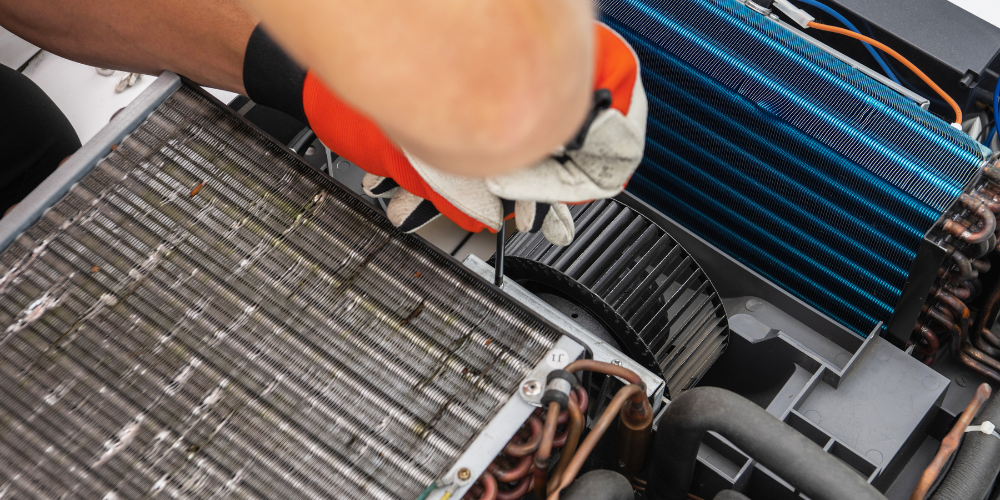
Heat exchangers transfer heat from one medium to another. In commercial and industrial HVAC/R systems, that heat transfer affects equipment capacity, energy consumption, and operating costs.
When people talk about heat exchanger thermal efficiency, they are usually trying to answer a simple question: How well is the equipment transferring heat? Technicians and engineers may use measurements such as heat transfer rate and approach temperature to answer that question and identify performance issues before they lead to higher costs and downtime.
What is Heat Exchanger Thermal Efficiency?
At its most basic, thermal efficiency is a measure of how effectively a heat exchanger transfers heat from one fluid, refrigerant, or air stream to another.
In HVAC and refrigeration systems, coils are one of the most common types of heat exchangers. In a new system, performance is usually close to the original design conditions. Over time, dirt buildup, restricted airflow, and internal fouling can all reduce heat transfer performance.
The goal is not simply to move heat, but to transfer as much heat as possible under the system’s operating conditions.
Common Methods Used to Measure Thermal Efficiency
Several measurements can be used to evaluate heat exchanger performance. During equipment design, engineers may rely on detailed calculations. In the field, technicians typically focus on temperatures, flow rates, and operating conditions.
Temperature Difference (Delta T)
One of the most common indicators of heat exchanger performance is the temperature difference between the entering and leaving fluids or air streams.
For example:
- Air entering the coil: 80°F
- Air leaving the coil: 60°F
- Delta T: 20°F
Delta T can tell you a lot, but it does not tell the whole story. A large temperature difference is not always a sign that a system is operating efficiently. Unexpected changes in Delta T can point to airflow restrictions, fouling, circulation issues, or other performance problems.
Many technicians check Delta T first because it can be measured quickly and provides a useful snapshot of system performance.
Heat Transfer Rate
Another common measurement is the actual amount of heat being transferred through the heat exchanger.
Heat transfer rate is commonly expressed in:
- BTU/hr
- Tons of refrigeration
- Kilowatts of cooling or heating capacity
A heat exchanger that transfers more heat under the same operating conditions is generally performing more effectively.
Many facility operators monitor heat transfer rates over time to identify gradual performance losses. This can help identify developing issues before they become larger maintenance problems.
Approach Temperature
Approach temperature is another useful performance indicator, particularly in cooling and refrigeration systems.
Approach temperature is the difference between the fluid leaving the heat exchanger and the medium it is exchanging heat with.
In general, a smaller approach temperature indicates stronger heat transfer performance. As fouling, scaling, airflow restrictions, or circulation problems develop, the approach temperature often increases.
In many facilities, rising approach temperatures are one of the first signs that cleaning or maintenance may be needed.
Factors That Affect Heat Exchanger Thermal Efficiency
Even a properly designed heat exchanger will experience some performance loss over time. Several factors can affect how efficiently heat is transferred.
Airflow and Fluid Flow
Common issues:
- Dirty filters
- Blocked fins
- Fan problems
- Low fluid flow rates
- Flow restrictions
- Circulation issues
Any of these conditions can reduce heat transfer performance.
Fouling and Contamination
Fouling is one of the most common causes of declining heat exchanger efficiency.
Examples:
- Dirt accumulation
- Scale formation
- Corrosion deposits
- Biological growth
These materials create an insulating layer between the heat transfer surface and the fluid or air stream.
Routine inspection and cleaning help maintain heat transfer performance. In many cases, a dirty heat exchanger can continue operating long after performance has started to decline.
Coil Design
Heat exchanger performance is heavily influenced by coil design. Surface area, fin spacing, tube arrangement, circuiting, and material selection all affect how efficiently heat is transferred.
A coil designed for one set of operating conditions may perform poorly in another application. Proper coil selection balances heat transfer performance, airflow requirements, pressure drop, durability, and maintenance considerations.
This is one reason replacement coils are typically engineered around the operating conditions of the original equipment rather than treated as generic components.
Airside vs. Waterside Causes of Performance Loss
When performance starts to drop, one of the first questions is where the problem is occurring. In many cases, it can be traced to either the air side / fluid side of the heat exchanger.
Airside Issues
Common airside issues:
- Dirty coil fins
- Restricted airflow
- Clogged filters
- Fan performance problems
These conditions can lower heat transfer performance.
Waterside or Refrigerant-Side Issues
Common fluid-side issues:
- Scale buildup
- Fouling
- Flow restrictions
- Reduced refrigerant flow
- Internal corrosion
By the time system capacity begins to noticeably decline, heat transfer performance may have already been affected for months.
This is why routine inspections and performance tracking can be useful, especially on equipment that operates year-round.
Signs of Reduced Thermal Efficiency
Declining heat exchanger performance is not always immediately visible, but several warning signs can indicate that the equipment is no longer operating as intended.
- Higher energy consumption
- Reduced heating or cooling capacity
- Longer equipment run times
- Increasing approach temperatures
- Uneven discharge temperatures
- Frequent system cycling
- Rising operating costs
If several of these conditions appear at the same time, it may be worth taking a closer look at the heat exchanger.
How to Improve Heat Exchanger Thermal Efficiency
In many cases, declining performance can be corrected through heat exchanger maintenance rather than equipment replacement.
Potential improvements:
- Cleaning coil surfaces
- Removing scale and deposits
- Restoring proper airflow
- Correcting flow rate issues
- Repairing damaged components
- Replacing severely degraded coils
When a coil reaches the end of its service life, replacement may be the best option.
Improve Heat Exchanger Performance with the Right Coil
CS Coil designs and manufactures microchannel coils for high-efficiency heat transfer. We offer condenser coils, fluid coolers, and evaporator coils for a variety of industries and applications.
Contact CS Coil to request a quote today.