Why is My Evaporator Coil Freezing Up?
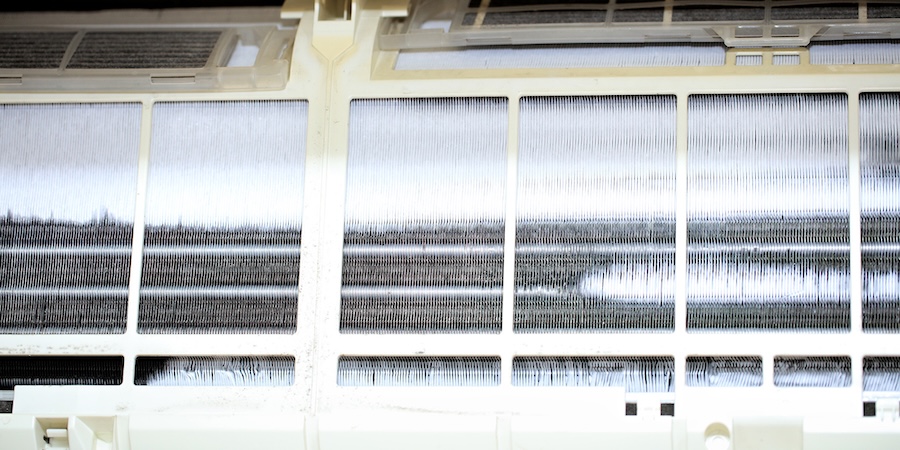
Ice on an evaporator coil is not normal. In commercial and industrial HVAC/R systems, evaporator coil freezing up is a symptom of an underlying imbalance, such as typically airflow, refrigerant conditions, or heat transfer limitations. When left unaddressed, you can end up damaging the compressor.
What’s Actually Happening When a Coil Freezes
An evaporator coil is designed to run cold, but not below freezing. Under normal operation, refrigerant absorbs heat from the air moving across the coil and keeps the coil surface above 32°F. If not enough heat is getting to the coil, or the refrigerant conditions shift, the coil temperature drops below freezing. Moisture that is already on the coil turns to ice.
Once ice starts forming, it compounds the problem:
- Ice insulates the coil surface
- Airflow drops further
- Heat transfer declines
- More ice forms
This cycle continues until the coil is partially/fully blocked.
A quick way to think about it in the field:
→ Freezes shortly after startup, usually airflow
→ Freezes after running for a while, usually refrigerant or load related
6 Most Common Causes of Evaporator Coil Freezing Up
1. Restricted Airflow Across the Coil
This is the most common cause in commercial systems. The evaporator depends on a steady volume of return air to keep coil temperature stable.
What might reduce airflow?
- Dirty or high pressure drop filters
- Fouled evaporator coil surface
- Blocked or collapsed ductwork
- Dampers closed or out of balance
- Blower running slow or not moving enough air
When airflow drops, less heat reaches the coil, causing refrigerant temperature to fall below freezing.
2. Dirty or Fouled Evaporator Coil
Even if airflow is okay, a dirty coil will not transfer heat well.
In industrial settings you see dust buildup, grease or oil in the air, and corrosion products collecting on the surface. That layer acts like insulation. Heat does not move into the refrigerant the way it should, and the coil temperature drops.
3. Low Refrigerant Charge or Leaks
Low refrigerant changes pressure conditions inside the evaporator. As pressure drops, saturation temperature drops with it.
Result: the coil operates below freezing even with normal airflow.
Common signs:
- Ice on the suction line
- Reduced cooling
- System runs longer than normal
This is not a top-off situation. If refrigerant is low, there is a leak somewhere. Adding charge without fixing it will not hold.
4. Metering Device or Expansion Issues
If refrigerant is not being fed correctly into the coil, you can get sections running too cold. Possible causes might be a TXV not feeding correctly, superheat set wrong, or a restriction in the liquid line. This can show up as uneven freezing across the coil, not always the whole coil at once.
5. Low Load Conditions
Not every freeze happens at peak load. Sometimes it happens when the system does not have enough heat to absorb. You see this with oversized equipment, low return air temperatures, or reduced process or occupancy load. Less heat coming in means the refrigerant does not warm up enough, so coil temperature drops.
6. Drainage or Moisture Issues
If condensate cannot drain properly, moisture accumulates on or around the coil and increases ice formation risk. What causes this?
- Clogged condensate drain lines
- Improper drain pan pitch
- Biofilm buildup
While not always the root cause, it accelerates ice buildup once freezing begins.
What to Do When You See Ice on the Coil
Immediate steps should focus on preventing damage, NOT forcing the system to run.
- Shut the cooling off
- Run the fan only to thaw the coil
- Check filters and airflow path
- Look for obvious issues with refrigerant or drainage
Do NOT try to chip ice off the coil. It is easy to damage fins or tubes doing that.
If it freezes again after restart, the problem is still there. At that point you need to check airflow, refrigerant pressures, and overall coil condition.
When it Becomes a Coil Problem
The coil usually is not the original cause, but it takes the wear. Repeated freeze and thaw cycles cause fin damage, tube stress, and loss of heat transfer performance. At a certain point, cleaning and minor repair does not get performance back.
If the coil is already fouled, corroded, or structurally compromised, coil replacement may be the more practical path rather than repeated cleaning and repair.
Diagnose and Replace the Right Way with CS Coil!
If you are dealing with an evaporator coil freezing up in a commercial or industrial system, the focus should be on finding the root cause and fixing it at the system level. Temporary fixes do not last!
CS Coil is a trusted coil manufacturer that works with facilities and contractors on:
- Engineered evaporator coil replacements
- Matching performance to existing equipment
- Protective coil coatings for harsh environments
- Fast quotes, usually within 24 hours
- Lead times that help limit downtime
If freeze ups keep happening or the coil is no longer performing, it is worth reviewing whether replacement makes more sense than continuing to patch the system.
Contact a coil specialist today to discuss your problem.