Heat Exchanger Efficiency: How Coil Design Affects HVAC Performance
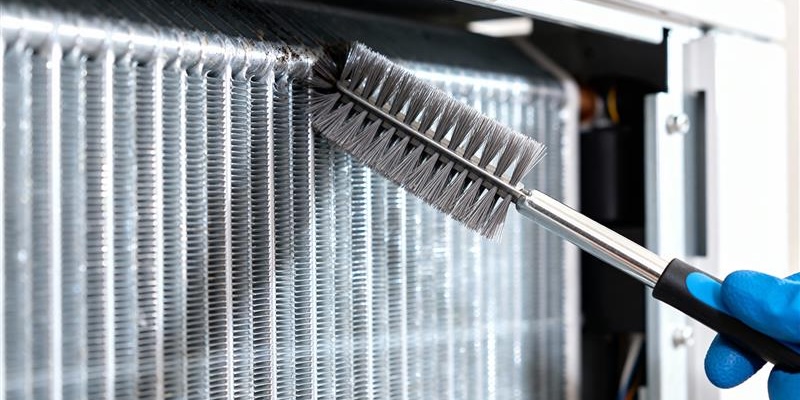
Heat exchanger efficiency is one of the most important (and often overlooked) factors in HVAC system performance. While equipment selection often gets the most attention, the coil itself handles the actual heat transfer. Poor coil design or degraded coil condition can affect energy costs, capacity, equipment life, and more.
What is Heat Exchanger Efficiency?
In HVAC applications, efficiency is best evaluated by how closely the coil approaches the temperature of the entering air stream. This is often described as approach temperature, the difference between the leaving fluid temperature and the entering air temperature.
Lower approach temperature indicates stronger thermal performance and more effective heat transfer across the coil surface. A wider approach can indicate fouling, undersizing or poor refrigerant distribution. Put simply, higher performance results in:
- More effective cooling or heating output
- Lower energy consumption
- Reduced compressor and fan strain
- More stable system operation under load
Even small drops in thermal performance can have a measurable impact on operating cost over time.
How Coil Design Impacts Heat Exchanger Efficiency – 5 Ways
1. Surface area and fin density
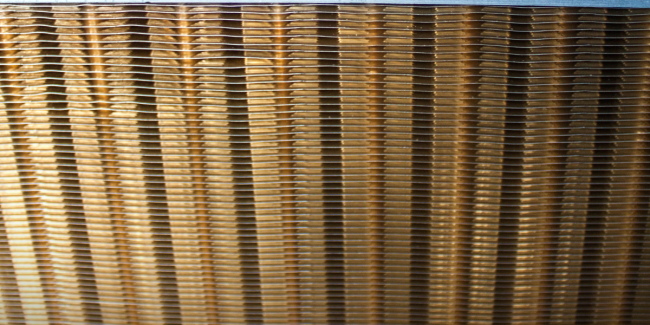
Heat transfer depends heavily on available surface area. Coils with optimized fin density increase contact between air and the coil surface, improving heat exchange.
The trade off is airside pressure drop. Higher fin density improves sensible heat transfer but increases resistance to airflow. This can raise fan energy consumption and reduce total system capacity if not properly matched to the fan curve. The correct design balances heat transfer surface area with allowable pressure drop for the application.
2. Tube geometry and material
The type and shape of tubing plays a major role in thermal performance.
- Copper tube/aluminum fin coils offer durability and strong heat transfer characteristics
- Microchannel coils provide high efficiency with reduced refrigerant charge
- Tube diameter and internal enhancements influence refrigerant distribution and heat transfer rates
Material selection also affects corrosion resistance, which directly impacts long-term performance and operational longevity.
3. Circuiting design
Refrigerant circuiting determines how evenly refrigerant distributes through the coil. Poor circuiting can lead to non-uniform loading, where sections of the coil are underfed. This can create dead spots that reduce overall capacity and efficiency.
Well engineered circuiting on the other hand maintains consistent refrigerant distribution across the coil surface, improving heat transfer effectiveness and system stability. Circuiting will also control refrigerant velocity, which must be high enough for effective heat transfer, but low enough to avoid pressure drop and tube wear.
4. Airflow management
Keep in mind that even a well designed coil will underperform if airflow is not properly managed. Poor airflow distribution can reduce effective coil utilization and increase energy consumption. Coil depth, row count, and fin spacing can all determine how air moves through the coil. For this reason, the design must account for fan capability, system static pressure, and actual operating conditions.
5. Coatings and environmental protection
Corrosion and fouling are significant threats to heat transfer effectiveness. Fortunately, corrosion resistant coatings help maintain performance, by preventing:
- Fin degradation
- Reduced thermal conductivity
- Airflow blockage due to buildup
In coastal or industrial environments, coating selection has a measurable impact on coil lifespan and sustained performance. Design often includes a fouling factor to account for real world conditions where coils accumulate debris, salt or contaminants overtime.
The Cost of Poor Heat Exchanger Efficiency
When coil performance drops, the system compensates…usually at a higher cost.
- Higher energy consumption
- Longer run times
- Increased maintenance frequency
- Premature equipment failure
In many cases, facilities will simply assume the entire unit is failing when the real issue is a degraded or poorly designed coil. However in field replacements, performance loss is often tied to fouling, improper circuiting, or airflow mismatch rather than full equipment failure.
Repair vs. Replacement
When a coil fails/underperforms, the decision is not only about getting the system running again. Rather, it is also an opportunity to improve performance.
A properly engineered replacement coil can do three things.
- Restore/improve original performance.
- Reduce energy usage.
- Extend the life of the existing equipment.
Custom replacement coils can also be designed for drop-in compatibility, allowing performance improvements without requiring major piping or ductwork modifications.
This becomes especially important when replacing OEM coils, which are often designed for standard conditions rather than the specific environment the equipment operates in.
Why Custom Coil Design Makes a Difference
Custom engineered coils allow performance to match actual operating conditions. Instead of a standard OEM approach, custom coil design can optimize:
- Fin spacing for the environment
- Circuiting for load conditions
- Materials and coatings for corrosion resistance
- Pressure drop and airflow characteristics
Work with CS Coil to Improve Heat Exchanger Efficiency
If your system is underperforming or you’re dealing with a failed condenser or evaporator coil, full equipment replacement may not be necessary. CS Coil designs and manufactures custom replacement coils built to match your system and operating conditions, with fast quoting and turnaround times.
Contact CS Coil today to discuss your application, request a quote or schedule a site measurement.